Released ~2 million years ago
Erectus
Go further. Run longer.
A resilient model for long-horizon tasks. Extended operating range, sustained execution, and an upgraded energy stack.
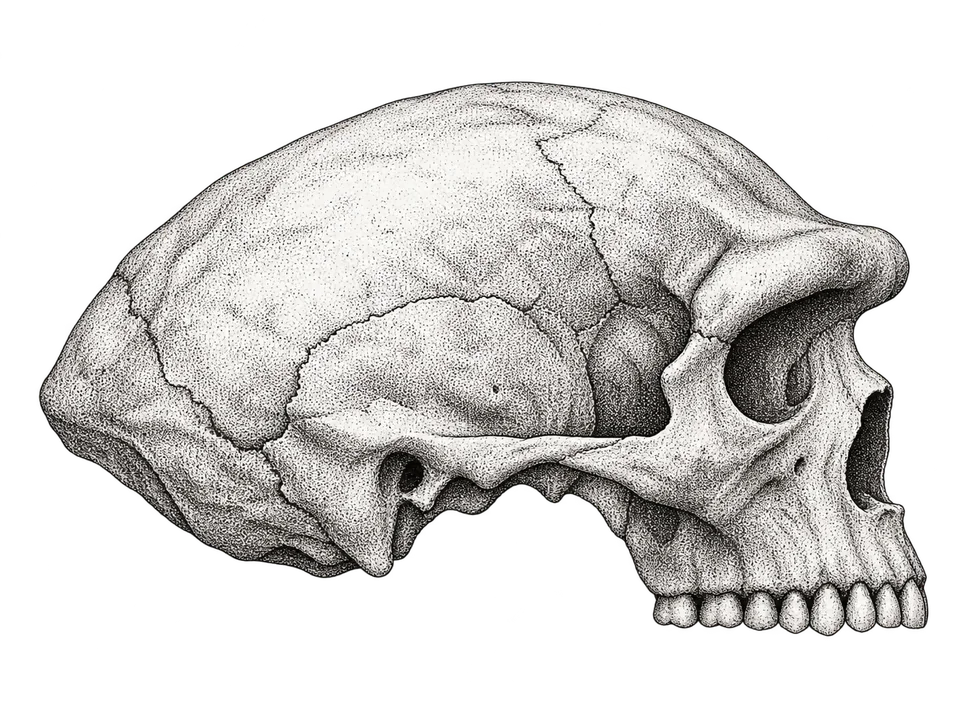
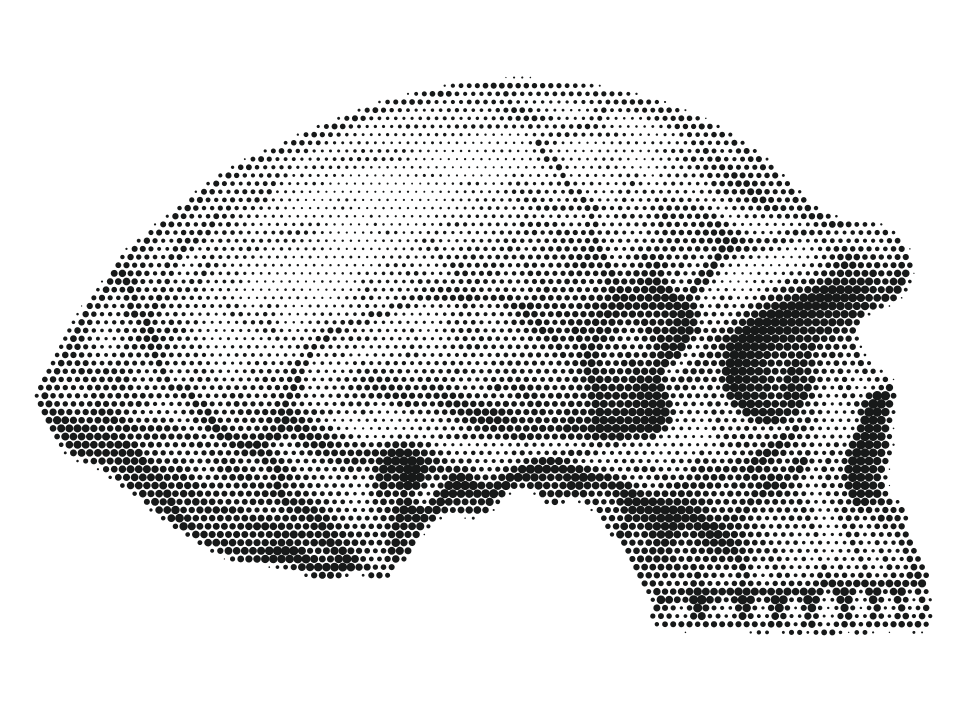
- Neural capacity
- 62.0BNeurons · estimated
- Peak deployment
- 1MDevices · Illustrative scenario
Long-horizon operation
Erectus extends the operating range of the model family. Sustained movement supports deployment across varied environments.
An expanded energy program
Erectus brings energy use into the architecture roadmap. Operating range, movement, and access to resources become connected deployment concerns.
Model card
- Release estimate
- ~2 million years ago
- Estimated brain mass
- 963 g
- Architecture
- Homo erectus
- Deployment
- Africa and Asia
- Body size
- 145–185 cm; 40–68 kg
- Reference skeleton
- Turkana Boy, about 1.6 million years old
Research notes
Architecture & deployment
Deployment scale
Hominid peak-deployment scenario: 10,000,000 km² of occupied habitat at 0.1 devices per km². Both inputs are assumptions; the resulting 1,000,000 devices are an illustrative census estimate.
Develop for a wider operating range
With Erectus, we developed a release whose identity is range. Relatively long legs and shorter arms place the body firmly in a terrestrial operating mode. Its geographic record extends across Africa and Asia, making movement through different surroundings a defining part of the deployment story. (Smithsonian n.d.)
The engineering consequence is a change in the whole system's operating conditions. The model carries its body and behavior between environments with different routes and materials. Erectus brings mobility, body proportions, and geographic breadth into one release, while retaining substantial regional variation within that broad deployment. (Smithsonian n.d.)
Develop the material workflow
The associated technology expands the material interface. Acheulean assemblages include large cutting tools such as handaxes and cleavers, giving the Erectus development period a recognizable technical repertoire. Shaping an extended cutting surface changes the relationship between the body, the stone, and the work the finished object can perform. (Smithsonian n.d.)
We treat the workflow as part of the release rather than an accessory to its anatomy. The body provides reach and movement; material preparation provides another route to useful action. Together, they let the development story describe both how the model moves through a place and how it transforms what it encounters there.
Add a thermal development path
Fire introduces a further development path: changing materials through heat. At Wonderwerk Cave, Berna and colleagues identified burned bone and ashed plant remains in their sedimentary context deep inside the cave. The microscopic evidence supports burning at that location during the broad Erectus development period. (Berna et al. 2012)
We include thermal processing with that deployment context attached. It adds a new kind of interaction between a hominin and its surroundings, documented separately from the locomotor and cutting-tool systems. Erectus spans a long, varied development history; its release brings these changes together without assigning an identical technical configuration to every population.
Specification sources & notes
Erectus uses the approximately 2-million-year early checkpoint DNH 134 at Drimolen. The published dating interval is approximately 2.04–1.95 million years; the authors describe the cranium as having clear affinities to Homo erectus. This is early fossil evidence, not an exact species-origin date. (Herries et al. 2020)
Architecture, geographic range, body metadata, and the reference skeleton follow the Smithsonian catalogue (Smithsonian n.d.). The brain-mass input comes from Herculano-Houzel & Kaas (2011).
Parameter estimate & method
62.0 billion neurons, species-level scaling estimate (Herculano-Houzel & Kaas 2011)
Published whole-brain estimate from Table 4, using primate cellular scaling and reconstructed brain mass. (Herculano-Houzel & Kaas 2011)
Timeline source & method
Architecture at scale
Inside the neural budget
Whole-brain neurons, billions
Solid bars show scaling estimates. Flores and Denisov extrapolate from individual reference skulls. Ardi’s hatched extension spans the published cranial-capacity interval; it is not a confidence interval. The outlined Sapiens-1 bar shows the adult human cell-count mean. Neural parameters here count neurons, not synapses or learned weights. Capacity alone does not measure intelligence.
Evidence & limitations
One name, substantial variation
The geographic and temporal spread includes considerable variation in body size and anatomy. A single species label does not imply identical behavior in every environment. (Smithsonian n.d.)
From the research program
Learning that compounds across models↗References
- Berna, F. et al. Microstratigraphic evidence of in situ fire in the Acheulean strata of Wonderwerk Cave, Northern Cape province, South Africa. Proceedings of the National Academy of Sciences 109, E1215–E1220 (2012). doi:10.1073/pnas.1117620109
- Herculano-Houzel, S. & Kaas, J. H. Gorilla and Orangutan Brains Conform to the Primate Cellular Scaling Rules: Implications for Human Evolution. Brain, Behavior and Evolution 77, 33–44 (2011). doi:10.1159/000322729
- Herries, A. I. R. et al. Contemporaneity of Australopithecus, Paranthropus, and early Homo erectus in South Africa. Science 368, eaaw7293 (2020). doi:10.1126/science.aaw7293
- Smithsonian National Museum of Natural History. Homo erectus. What Does It Mean to Be Human? Human Origins Program (n.d.). humanorigins.si.edu/evidence/human-fossils/species/homo-erectus